Explore how our thermoplastic road marking paint enhanced safety and durability in the 5-km San Miguel Rural Road Project in Leyte, Philippines, connecting communities and boosting economic growth.
Case Details
Introduction
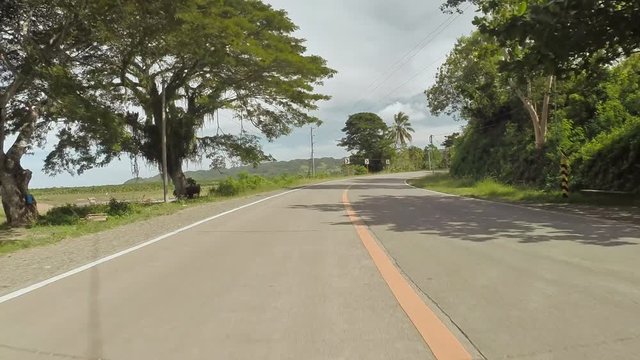
The San Miguel Rural Road Project represents a pivotal infrastructure initiative aimed at fostering economic growth and connectivity in the agricultura heartland of Leyte Province, Philippines. This project involved constructing a new 5-kilometer, two-lane road connecting Barangay Santa Rosa and Barangay San Pedro, facilitating faster and safer transportation of agricultural goods to markets. A critical component of this project was the application of thermoplastic road marking paint, selected for its exceptional durability, high reflectivity, and cost-effectiveness. This case study highlights the successful implementation of our company’s thermoplastic paint, showcasing its advantages in rural infrastructure and its potential for broader application across the Philippines.
Project Background
- Location: San Miguel, Leyte Province, Philippines – a region predominantly reliant on agriculture.
- Project Type: Construction of a new 5-kilometer, two-lane rural road.
- Objective: To enhance market access for farmers by connecting Barangay Santa Rosa and Barangay San Pedro, reducing transportation time and boosting local economic activity.
- Scope: The project encompasses a 5-kilometer road with drainage systems, road shoulders, and safety features, executed within a constrained budget.
Project Challenges
- Climatic Conditions: Leyte Province experiences frequent rainfall and high humidity, necessitating road markings that can withstand prolonged exposure to wet conditions without fading or peeling.
- Complex Terrain: The rugged terrain of the region posed challenges for achieving strong adhesion and uniform application of road markings.
- Budget Constraints: The project required a cost-effective marking solution with minimal maintenance needs to align with limited funding.
- Safety Requirements: High-visibility road markings were essential to ensure safe driving conditions, particularly at night and during adverse weather.
Supplier Selection Process
To ensure the selection of the most suitable road marking paint, the San Miguel local government initiated a competitive bidding process, inviting multiple suppliers to submit proposals and samples.
Sample Submission and Testing
- Sample Provision: Our company provided samples of our thermoplastic road marking paint, accompanied by comprehensive technical specifications, including data on durability, reflectivity, and environmental impact.
- On-Site Testing: The project team conducted rigorous on-site tests to evaluate the paint’s performance under local conditions. Tests focused on adhesion to asphalt surfaces, reflectivity under low-light conditions, and drying time in humid environments.
- Comparative Analysis: Our paint was tested alongside samples from other suppliers, assessing factors such as durability, cost-effectiveness, and compliance with the Department of Public Works and Highways (DPWH) standards.
Selection Criteria
- Performance Excellence: Our paint demonstrated superior adhesion, reflectivity (achieving 300 mcd/lx/m²), and resistance to wear in wet conditions.
- Cost-Benefit Analysis: While our product had a slightly higher initial cost, its extended lifespan and reduced maintenance needs offered significant long-term savings.
- Technical Support: We provided extensive technical support, including training for the application team and on-site guidance during implementation.
- Environmental Compliance: Our thermoplastic road marking paint, low-VOC formula aligned with the project’s sustainability objectives, minimizing environmental impact.
Collaborative Testing and Final Decision
- Iterative Cooperation: Over several weeks, we worked closely with the project team, conducting multiple rounds of testing to address specific concerns, such as adhesion on uneven surfaces and performance during heavy rain.
- Final Selection: After thorough evaluation, our thermoplastic paint was selected for its outstanding performance, cost efficiency, and our commitment to ongoing support. The decision was formalized through a contract with the local government.
Closing the Deal
- Training and Support: We provided hands-on training for the application crew, focusing on the optimal use of our TX-200 Hot Melt Marking Machine and best practices for paint application.
- Quality Assurance: Our team conducted regular site visits to monitor the application process, ensuring compliance with quality standards.
- Post-Application Support: We offered guidance on maintenance strategies to maximize the lifespan of the markings, fostering a long-term partnership with the local government.
Solution: Thermoplastic Road Marking Paint
- Product Selection: Our company’s thermoplastic road marking paint was chosen for its proven performance in challenging environments.
- Product Features:
- Composed of high-quality synthetic resin, reflective glass beads, and premium pigments.
- Exceptional durability, capable of withstanding heavy vehicle traffic and harsh tropical weather.
- Superior reflectivity, ensuring high visibility during nighttime and rainy conditions.
- Rapid drying properties, minimizing traffic disruptions during application.
- Eco-friendly formulation, reducing volatile organic compound (VOC) emissions.
- Selection Rationale: Compared to conventional paints, our thermoplastic paint offers enhanced durability, better reflectivity, and lower long-term maintenance costs, making it ideal for rural road projects.
- Compliance: Fully compliant with DPWH standards (e.g., Department Order No. 103, Series of 2013) and international road marking regulations.
Implementation Process
- Surface Preparation: The road surface was thoroughly cleaned using high-pressure water jets and primed to enhance paint adhesion.
- Paint Application:
- The thermoplastic paint was heated to 200°C using the BL-SC300 Hot Melt Marking Machine.
- Applied via spraying and extrusion techniques, maintaining a uniform thickness of 1.5–2 mm.
- Reflective glass beads were incorporated during application to enhance nighttime visibility.
- Construction Equipment: The BL-SC300 Hot Melt Marking Machine, supported by our technical team, ensured precise and efficient application.
- Timeline: The road marking phase was completed in two weeks following the main road construction, minimizing delays.
- Quality Control: Regular inspections were conducted to verify marking thickness, reflectivity, and adhesion, ensuring compliance with project specifications.
Results and Benefits
- Enhanced Safety: The high reflectivity of the markings (300 mcd/lx/m²) significantly improved visibility, reducing the risk of accidents during nighttime and adverse weather conditions.
- Durability: Post-project evaluations confirmed that the markings remained clear and intact after 12 months, with no maintenance required.
- Cost Efficiency: Compared to traditional paints, our thermoplastic markings reduced maintenance frequency by at least 50%, resulting in substantial cost savings.
- Community Feedback: Local farmers and authorities commended the clarity and durability of the markings, noting improved road usability and safety.
- Quantitative Metrics: The markings achieved a reflectivity of 300 mcd/lx/m², surpassing international standards, and maintained adhesion under frequent rainfall.
Environmental Impact
- Eco-Friendly Formulation: The use of low-VOC, thermoplastic paint minimized environmental harm, aligning with sustainable development goals.
- Resource Conservation: The long lifespan of the markings reduced the need for frequent repainting, conserving materials and energy.
- Sustainability Contribution: The project supports the Philippines’ commitment to green infrastructure by adopting environmentally responsible materials.
Conclusion
The San Miguel Rural Road Project exemplifies the transformative potential of thermoplastic road marking paint in rural infrastructure development. By addressing the challenges of climate, terrain, budget, and safety, our product delivered outstanding performance, enhancing road safety and economic connectivity. The successful supplier selection process underscores our company’s commitment to quality, collaboration, and customer support. We recommend extending the use of thermoplastic paint to other rural road projects in the Philippines, leveraging its proven benefits. Our company is eager to partner with DPWH and other stakeholders to advance sustainable infrastructure development nationwide.


