In the heart of Kinshasa, the capital of the Democratic Republic of the Congo, a quiet threat was growing more visible by the day — or rather, less visible. Road markings, once bright guides through busy streets, had long faded into near-invisibility. Pedestrian crossings disappeared beneath layers of dust and rain; lane lines eroded until drivers were left to interpret direction by instinct. In a city of more than 17 million people and growing traffic congestion, faded paint wasn’t just an aesthetic problem — it was a safety crisis.
During rainy seasons, which span nearly half the year, the problem worsened. Streets flooded, and any remnant of marking was erased by the water’s force. At night, with sporadic street lighting and minimal reflectivity left in old lines, drivers took chances they didn’t even realize they were taking. In the words of one bus operator: “At night, you just follow the car in front and pray they know the road.”
It was time for a change — not just fresh paint, but a safer, smarter system to guide Kinshasa’s daily flow.
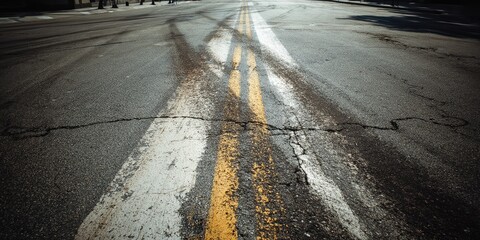
In early 2025, Kinshasa’s municipal authorities launched a bold initiative: to revitalize over 50 kilometers of key urban roads with high-performance, long-lasting road markings. More than just repainting, this was a safety and infrastructure upgrade — one that would signal a more modern, resilient city.
The project team faced tough conditions: tropical rainfall, intense sun, patchy asphalt, and a mix of heavy trucks, taxis, and motorcycles crisscrossing the streets. They needed a material solution that would not just last longer, but also perform better — through rain, heat, and traffic alike.
Thermoplastic road marking paint, applied hot and drying within minutes, proved to be the perfect solution. Unlike traditional paint, which can take 15–30 minutes to cure — leaving roads closed or at risk of damage — thermoplastic sets quickly. Crews in Kinshasa could open roads within minutes of application, avoiding traffic jams and beating the region’s unpredictable rainfall.
The city had long struggled with markings that faded or peeled within a year. Thermoplastic paint offered a dramatic improvement, lasting 3 to 5 years depending on traffic and surface condition. With its thick composition and strong bonding, it could withstand daily punishment from heavy vehicles, sharp turns, and sudden stops — all common on Kinshasa’s main routes.
One of the key lifesaving features of thermoplastic markings is their ability to reflect headlights at night. Thanks to the inclusion of glass beads both mixed into and dropped onto the hot paint surface, each stripe became a source of guidance in low-light and rainy conditions. For a city with erratic lighting infrastructure, this added reflectivity was a literal beacon.
Kinshasa’s equatorial climate — hot, humid, and wet — posed challenges for conventional road paints. Thermoplastic, with 100% solid content and a high softening point (above 100°C), resisted UV degradation, water erosion, and thermal expansion. Whether during midday sun or torrential rain, the markings stayed intact and functional.
Thermoplastic markings aren’t just longer-lasting — they look better too. Applied at 2–4 mm thick, they stand out on old or cracked asphalt, sealing imperfections and delivering bold, highly visible lines. Crosswalks became clearer. Arrows and turn lanes popped with clarity. The roads looked more organized — and felt safer.
To ensure international quality, the project engineers adopted BS 3262, the British Standard for hot-applied road marking materials. But they didn’t stop there. They knew that materials designed for a mild UK climate wouldn’t automatically succeed in tropical Africa.
Instead, they collaborated with suppliers to adapt the formula — increasing the softening point, enhancing adhesion for humid road surfaces, and integrating anti-skid particles to reduce slipperiness during rain. These tweaks made the material not just compliant with international standards, but perfectly tailored to Congo’s conditions.
It was a practical blend of global best practice and local wisdom — a solution made for Kinshasa, not just imported into it.
BOLE, a Chinese manufacturer with years of export experience, offered certified thermoplastic paint that met BS 3262, AASHTO M249, and more. More importantly, they provided customized tropical-grade formulations with higher softening points and enhanced weather resistance — exactly what Kinshasa needed.
Local offers for thermoplastic paint exceeded $1,000 per ton, with questionable documentation. BOLE offered direct factory pricing of $600–800 per ton, even after shipping, taxes, and insurance. The cost savings were significant, freeing up budget to cover more road mileage or include glass beads and equipment.
BOLE didn’t just sell paint. They supplied glass beads, primer, preheaters, line-removal machines, and offered clear guidance on how to apply each component. Their team managed logistics, including customs paperwork and DRC’s FERI certificate, making the import process seamless for the Kinshasa municipality.
Communication was smooth — BOLE’s support team offered French-language service, technical datasheets, and video tutorials. For Kinshasa’s city officials and engineers, this wasn’t just helpful — it was crucial for adoption and execution. BOLE’s understanding of African import realities and construction culture made them more than a supplier — they were a true partner.
Within weeks of application, the impact was visible — and tangible. Drivers noted clearer lanes. Pedestrians felt safer crossing roads with bold new zebra stripes. Traffic police reported fewer confusion-based incidents at intersections.
Even after the next round of heavy rains, the markings held strong — still bright, still guiding.
A city official shared: “We used to paint lines just to check the box. Now, they’re actually saving lives.”
Kinshasa’s case shows what’s possible when cities combine global standards with local adaptation — and when they choose the right partner. BOLE’s one-stop, customizable, and multilingual approach made it easier for a growing African city to raise the bar on road safety.
The lesson? Road markings may seem like small details, but they make big differences — especially in places where infrastructure is stretched, weather is extreme, and every decision matters.
With the right material, the right supplier, and a focus on durability, African cities like Kinshasa can build safer streets — one bright stripe at a time.


