As a thermoplastic road marking paint manufacturer, we’re often asked about its durability. While known for lasting performance, its true lifespan depends on traffic, climate, and surface quality. In this article, we’ll explore how durable thermoplastic paint is—and what affects its long-term results.
What is Thermoplastic Road Marking Paint?
Thermoplastic road marking paint is a hot-melt coating made from synthetic resin, pigments, glass beads, and fillers. It melts when heated and solidifies on cooling, forming a strong bond with road surfaces. Known for its durability and high reflectivity, it’s ideal for long-term traffic markings.
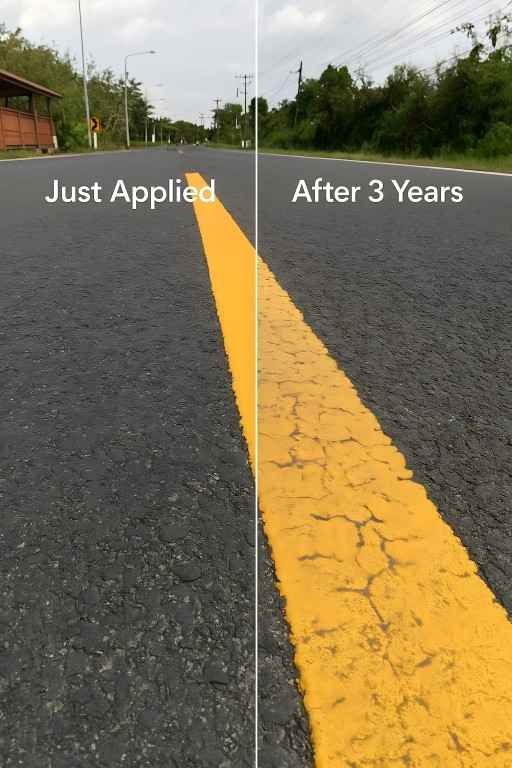
Typical Lifespan Overview
The lifespan of thermoplastic road marking paint typically ranges from 3 to 5 years under normal traffic and weather conditions. In low-traffic areas, it may last even longer. High durability and resistance to wear make it a preferred choice for permanent road markings on highways, city streets, and airports.
Key Factors That Affect Durability
Several factors impact the lifespan of thermoplastic road marking paint.
- Traffic Load: Heavy traffic—especially trucks and buses—leads to faster wear.
- Climate: Extreme temperatures, UV exposure, and freeze-thaw cycles can accelerate paint aging.
- Surface Condition: Well-maintained and smooth road surfaces support better adhesion and longer wear.
- Application Quality: Proper heating and even spreading using a reliable road marking machine are essential. Poor application may cause early peeling or fading.
Frequently Asked Questions (FAQ)
- Q: How is thermoplastic paint applied?
A: It is heated to 180–200°C and applied using a thermoplastic road marking machine.
- Q: Is it suitable for cold climates?
A: Yes, but additives may be needed to enhance flexibility.
- Q: Does it reflect light at night?
A: Yes, embedded glass beads provide excellent retroreflectivity.
- Q: Is it eco-friendly?
A: It contains low VOCs and meets many global environmental standards.
Maintenance Tips
To extend the life of thermoplastic road marking paint, conduct regular inspections for wear or fading. Reapply glass beads to maintain reflectivity where needed. Keep the surface clean of oil, debris, and rubber buildup. If lines start to crack or peel, re-marking should be done promptly to avoid safety risks. Proper maintenance ensures longer service life and cost savings.
Call to Action – Get Expert Support
Need help selecting the right thermoplastic road marking paint for your project? Contact our team for expert guidance and high-performance solutions tailored to your traffic marking needs.
sales01@gdbllb.cn
www.boleroadpaint.com


