Winter road marking construction faces challenges like low temperatures and complex surfaces, risking poor adhesion and durability. Proper execution ensures quality thermoplastic road marking paint application and traffic safety.
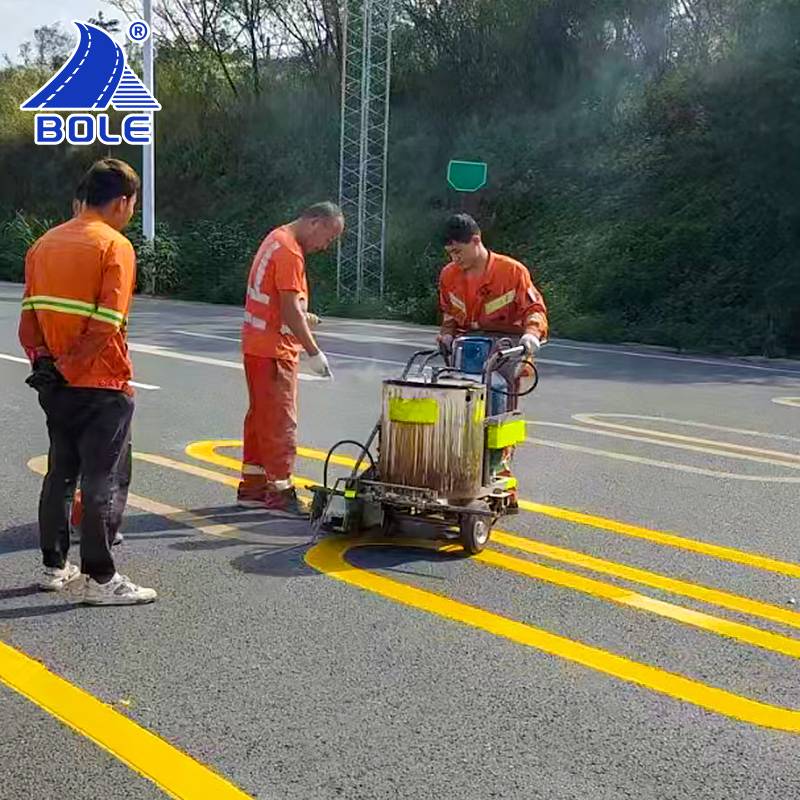
Safety Precautions Before Construction
Before starting winter road marking work, ensuring safety is the top priority. Proper safety measures should be in place to secure the construction site and maintain traffic order. Essential safety precautions include:
Construction Site Isolation
- The construction area should be enclosed with barriers or fences to prevent unauthorized vehicle or pedestrian entry.
Warning Signs
- Clear and visible signs, such as "Construction Ahead, Detour Required" or "Slow Down," should be placed around the site to alert drivers and pedestrians.
Traffic Guidance
- Depending on the situation, traffic personnel may be required to guide vehicles and prevent congestion or accidents caused by construction.
Personal Protective Equipment (PPE)
- Workers must wear reflective vests, helmets, and non-slip shoes to ensure their safety.
By implementing these safety precautions, construction work can proceed smoothly, reducing the risk of accidents and improving overall efficiency.
Road Surface Preparation
Low temperatures in winter lead to snow, ice, and frozen soil on roads, which can significantly impact the adhesion and durability of road marking paint. Therefore, thorough surface preparation is crucial before applying thermoplastic paint:
Snow and Ice Removal
- Use snow blowers, shovels, or de-icing agents to remove snow and ice. Heated water spraying can also help melt ice to keep the road surface dry.
Cleaning the Surface
- Use high-pressure air blowers or cleaning equipment to remove dust, mud, and oil stains to improve paint adhesion.
Monitoring Surface Temperature and Humidity
- The road surface should be above 5°C, and humidity levels should be kept low to prevent adhesion issues. If the weather is continuously snowy or wet, construction should be postponed until conditions improve.
In winter, thermoplastic paint cools rapidly after heating, which may reduce adhesion and cause peeling. Effective temperature control strategies include:
Proper Heating
- Thermoplastic paint should be heated to 180°C–220°C and stirred thoroughly to maintain uniformity.
Insulated Transport
- The paint should be kept warm during transfer from the heating equipment to the marking machine to prevent rapid cooling.
Real-time Temperature Monitoring
- Infrared thermometers should be used to continuously check both paint and road temperatures to ensure optimal application conditions.
Additionally, selecting low-temperature-resistant thermoplastic formulations, such as those containing EVA or SBS modifiers, can enhance cold resistance and crack prevention.
Controlling Marking Thickness and Preventing Cracks
Winter temperatures cause road surfaces to expand and contract, leading to microcracks. If the marking layer is too thick, it may crack as it cools. To prevent this:
Optimal Thickness
- Standard thermoplastic road markings should be between 1.5–2.5mm for regular roads and 2.5–3.5mm for highways, adjusted as needed.
Smooth Application
- The marking machine should maintain a consistent speed to ensure uniform thickness and prevent variations.
Crack Repairs
- Existing road cracks should be repaired before applying markings using sealants or anti-cracking agents.
High-quality thermoplastic road marking paint with excellent wear resistance and aging resistance should be used to improve longevity.
Curing and Maintenance After Construction
Although thermoplastic paint cools faster in winter, proper curing and maintenance ensure long-lasting markings:
Preventing Premature Traffic Exposure
- Barriers or warning signs should be placed to prevent vehicles and pedestrians from stepping on the markings before they fully cure.
Inspecting Adhesion
- After curing, check for peeling, bubbles, or cracks. If issues are found, repairs should be made immediately.
Regular Maintenance
- Since winter roads experience more wear due to snow, ice, and salt, markings should be inspected regularly, and reapplication should be performed as needed.
Environmental and Energy-Efficient Construction Practices
Winter construction should also consider environmental sustainability and energy efficiency:
Eco-Friendly Paint Selection
- Choose low-VOC (volatile organic compound) thermoplastic paint to reduce harmful emissions.
Efficient Heating Equipment
- Use energy-efficient heating units to lower fuel consumption and minimize environmental impact.
Minimizing Material Waste
- Optimize construction planning and workflow to reduce paint wastage and maximize material utilization.
By implementing these key measures, road marking paint application during winter can achieve higher durability, safety, and efficiency, ensuring clear and long-lasting road markings despite harsh conditions.


