Road markings are essential components of traffic management. They help regulate, guide, and inform road users to ensure safety and efficiency on the roads. These markings include lane lines, pedestrian crossings, directional arrows, stop lines, and more. The materials used for these markings play a critical role in visibility, durability, and safety — especially in high-traffic areas and challenging weather conditions.
Thermoplastic paint is a solid powder-based material that becomes a liquid when heated and is applied hot to the road surface. It quickly cools and hardens to form a tough, reflective, and long-lasting line.
These are not necessarily "disadvantages," but rather factors to consider based on your project scope and requirements.
Cold-applied liquid paints, such as water-based or solvent-based paints, are applied without heating. They are typically used for temporary or low-traffic road markings and can be applied with a roller or spray machine.
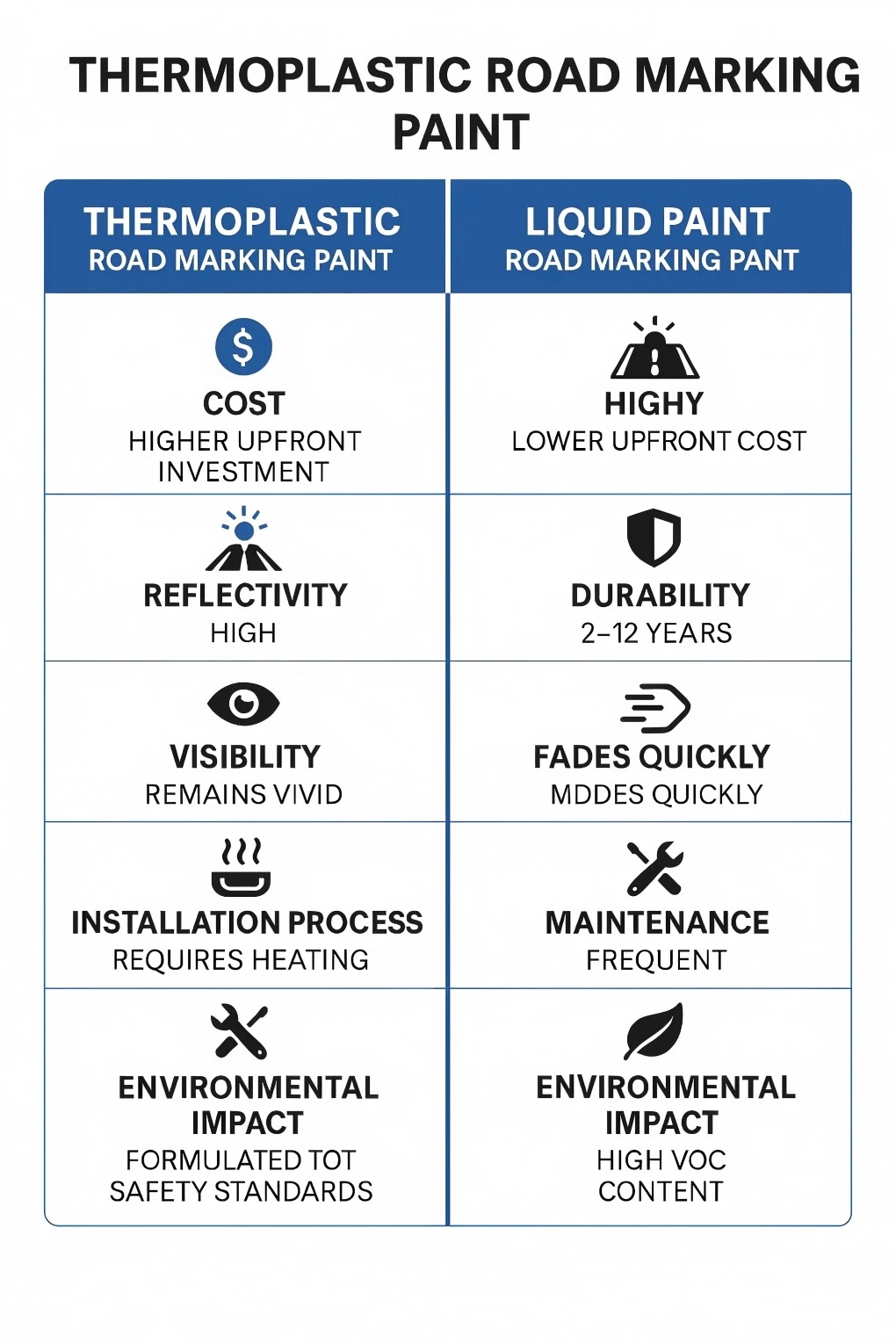
Choosing the right road marking materials depends on your project’s budget, durability expectations, environmental conditions, and maintenance capacity. Here’s a comparison based on key factors:
While thermoplastic paint involves higher upfront investment due to machine purchase and installation, liquid paint often needs frequent touch-ups, which increases total costs over time.
Thermoplastic road marking paint allows for high reflectivity, adjustable by the amount of glass beads mixed in. In contrast, liquid paint generally offers poor reflectivity, making it less visible at night.
Thermoplastic coatings are designed to last 2–5 years, even in high-traffic areas. Liquid paints are more suited for short-term applications and may require reapplication every 6–12 months.
Thermoplastic lines remain vivid and sharp over time, even under heavy usage. Liquid paint lines tend to fade quickly, especially in areas with harsh sunlight or rain.
Thermoplastic marking requires heating and professional equipment, but once applied, the lines set quickly and offer long-lasting performance. Liquid paints are easier to apply but require longer drying time and regular maintenance.
Thermoplastic markings are low maintenance, making them ideal for busy roads or locations with limited access for frequent repairs. Liquid paints require more frequent reapplication, leading to increased labor and downtime.
Thermoplastic paint is formulated to meet strict safety and environmental standards such as BS3262 and AASHTO, making it a reliable and eco-conscious choice. Water-based paints are also eco-friendly, while solvent-based paints may pose environmental risks due to high VOC content.
If you are managing a highway, urban road, airport, or industrial facility, and need long-lasting, reflective, and low-maintenance road markings, then thermoplastic paint is the superior choice. While the initial setup requires investment, the long-term benefits in performance, visibility, and safety far outweigh the costs.
However, for short-term, low-traffic, or budget-limited projects, cold-applied liquid paint may be a viable alternative.
Looking for high-quality thermoplastic road marking paint that meets international standards and delivers superior performance? We manufacture a range of customizable thermoplastic coatings designed for different climates, traffic conditions, and application needs.
Contact us today for a free consultation or quote!
Visit our website: https://www.boleroadpaint.com
WhatsApp: +86 13600459155
Email: sales01@gdbllb.cn
Let’s make roads safer, brighter, and more durable—together.


