Thermoplastic road marking paint plays a vital role in improving road visibility, traffic flow, and pedestrian safety. While the choice of material and color is important, one of the most critical—yet often overlooked—factors in its performance is application thickness.
In this guide, we’ll explore the standard thickness range, what affects it, how it impacts durability and cost, and how BOLE supports different project needs through customizable thickness options.
The recommended standard application thickness for thermoplastic road marking paint generally falls between 2.0 mm and 3.0 mm, which corresponds to approximately 80 to 120 mils.
| Metric (mm) | Imperial (mils) |
|---|---|
| 2.0 mm | ~80 mils |
| 2.5 mm | ~100 mils |
| 3.0 mm | ~120 mils |
These values are commonly referenced across international road marking standards, including:
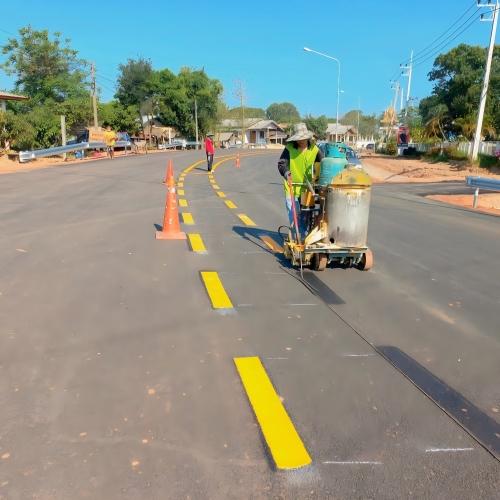
The thickness of thermoplastic road markings directly impacts performance, durability, and overall visibility. Here’s why getting the right thickness is essential:
Applying paint too thinly can lead to premature fading, peeling, or reduced night visibility—resulting in more frequent repainting and increased maintenance costs.
While 2.0–3.0 mm is considered the standard range, the ideal thickness for a specific project can vary depending on several key factors:
BOLE provides technical support to help you select the appropriate thickness based on your road surface type, marking purpose, and project timeline.
Accurate thickness measurement is essential to ensure that the applied thermoplastic meets both performance expectations and regulatory standards. Below are commonly used methods to verify thickness during and after application:
BOLE recommends verifying the dried thickness at multiple points across the line to ensure even application and to meet specifications such as AASHTO M249 or BS 3262.

Choosing the right thickness depends on your project's road type, traffic intensity, and expected marking lifespan. Based on years of manufacturing and field support experience, BOLE recommends the following:
| Application Scenario | Recommended Thickness |
|---|---|
| Urban streets & parking lots | 2.0 mm |
| School zones, intersections | 2.5 mm |
| Highways, heavy-traffic roads | 3.0 mm |
BOLE offers customized formulations to match your project needs, including:
Our technical team can also assist with formulation matching, on-site trials, and international standard compliance upon request.
The thickness of thermoplastic paint directly affects how much material you need—and ultimately, your total project cost. The thicker the application, the less area one ton can cover. Here's a general guideline based on BOLE's product standards:
| Thickness | Coverage per Ton |
|---|---|
| 2.0 mm | ≈ 250 m² |
| 2.5 mm | ≈ 200 m² |
| 3.0 mm | ≈ 170 m² |
Example: If you plan to stripe a 1,000 m² road area at 2.5 mm thickness, you would need approximately 5 tons of thermoplastic paint.
BOLE can help you calculate exact material requirements based on your line width, length, and desired thickness. We also offer packaging options and logistics support to ensure smooth delivery for local and export orders.
Choosing the correct thermoplastic road marking paint thickness is essential for ensuring long-term performance, compliance with international standards, and optimal cost-efficiency. Whether you're working on city streets, highways, or airport runways, the right thickness ensures safety, durability, and visibility.
BOLE offers:
Need help selecting the right product or calculating your material needs?
Contact BOLE today for expert advice and a free quotation:
Let us help you build safer, longer-lasting, and more efficient roads—starting with the right thickness.


