\r\n\r\n
Categories

How to Source Thermoplastic Road Marking Paint in the Philippines | BOLE

Learn how to buy thermoplastic road marking paint in the Philippines. Explore standards, prices, import options, and why BOLE is a trusted supplier.
Jun 4th,2025 1171 Views

1. Do You Need to Meet Government Standards?

In the Philippines, public infrastructure projects funded by government agencies must follow the Department of Public Works and Highways (DPWH) guidelines—specifically, Department Order No. 103, Series of 2013. These regulations set strict requirements for thermoplastic paint, including:

  • A minimum softening point of 180°C
  • Durable color retention and anti-skid properties
  • High reflectivity through the use of approved glass beads (AASHTO M247 Type I or III)

That said, not all projects fall under DPWH supervision. In practice, many private contractors handle projects like village roads, school zones, or parking lots, where strict compliance with government standards is not required. For these cases, BOLE offers alternative, cost-effective formulations that balance performance with affordability—ideal for private developments or budget-sensitive projects.

When dealing with international suppliers, it's important to clarify your intended application early. This ensures the paint matches either DPWH-standard or general-purpose requirements.
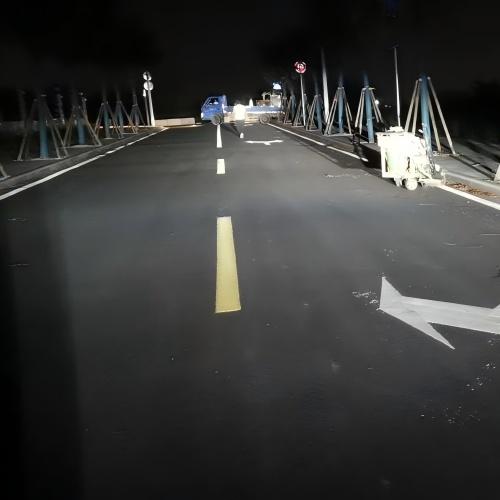
white thermoplastic road marking paint in the Philippine

2. Sourcing Options: Local Sellers or Direct Import?

The Philippine market for thermoplastic paint relies heavily on imports, as local manufacturing remains limited. Buyers generally choose between three sourcing options:

  • Local Retailers: Some platforms like Lazada.com.ph list ready-made brands such as Yamamoto, priced around ₱1,950 per 25kg bag—equivalent to approximately $1,370 per metric ton.
  • Domestic Contractors: Some firms like RuaCorp sell paint bundled with installation services, quoting rates between $700 and $1,000 per ton.
  • Factory Direct Imports: Buying directly from overseas manufacturers, such as BOLE in China, offers better pricing—typically between $300 and $700 per ton depending on specifications.

For bulk procurement, importing directly is often the most cost-efficient solution, provided you’re familiar with shipping and customs procedures.

3. Understanding the True Cost

To accurately estimate your budget, consider the full scope of costs beyond the base price of paint:

  • FOB Factory Price: $300–$700 per ton, depending on the composition (e.g., glass bead content, TiO₂ level, binder type)
  • Freight to Manila Port: Around $90–$150 per ton in a full 20-foot container (approximately 27 tons max capacity)
  • Import Duties & VAT: Rates vary, so it's advisable to consult your customs broker
  • Additional Items: You may need road marking machines, reflective glass beads, or packaging in both English and Tagalog

In many cases, even with freight and tax, the final landed cost from China can be 20–40% lower than local retail prices.

4. What to Look for in a Reliable Supplier

Sourcing paint is more than just getting a low price—it’s about ensuring quality, consistency, and compliance. Here are key qualities to look for in a supplier:

  • Standard Compliance: Can they meet DPWH, AASHTO M249, or BS 3262 standards?
  • Custom Formulations: Are they able to adjust bead percentage, binder types, and pigment for lead-free or eco-compliant needs?
  • Private Labeling: Do they support OEM/ODM for contractors who want branded packaging?
  • Technical & Export Support: Do they provide documentation, packing labels, and shipping guidance?

A reliable supplier should not only offer competitive pricing but also help you navigate the procurement process from quotation to delivery.

5. Why BOLE Is a Trusted Export Partner

BOLE is a certified Chinese manufacturer specializing in thermoplastic road marking paint with export experience across Southeast Asia. For the Philippine market, BOLE offers:

  • Formulations tailored to DPWH specifications or general-purpose use
  • Glass bead, pigment, and filler content customization
  • Matching equipment, including preheaters and hand-push machines
  • Export documentation in English, and product labels in Tagalog if required
  • Fast quoting and flexible MOQs for both government and private projects

Whether you need standard-compliant paint for a national road or a budget-friendly solution for a local car park, BOLE offers a complete and reliable supply chain—with certified products, fast logistics coordination, and multilingual customer service to support your road marking project from start to finish.

Conclusion

Procuring thermoplastic road marking paint in the Philippines doesn’t have to be complicated. By understanding which standards apply to your project, comparing local and imported options, and choosing a supplier that supports your specific needs, you can significantly reduce costs and improve project quality. BOLE stands ready to assist with reliable products, fast export processes, and full technical support for both public and private road marking applications.

Contact us

Please fill out the form below and we will contact your.
Name*
Email*
WhatsApp/Phone*
Company
Message
We use Cookie to improve your online experience. By continuing browsing this website, we assume you agree our use of Cookie.