Choose the complete marking system, not just the glass bead percentage. A 10% or 20% premixed glass bead formulation should be selected against the project specification, required nighttime performance, pavement conditions and application method. A higher percentage alone does not establish compliance or guarantee a brighter finished line.
This BOLE buyer's guide helps contractors and distributors compare the two options and prepare a useful quotation request.

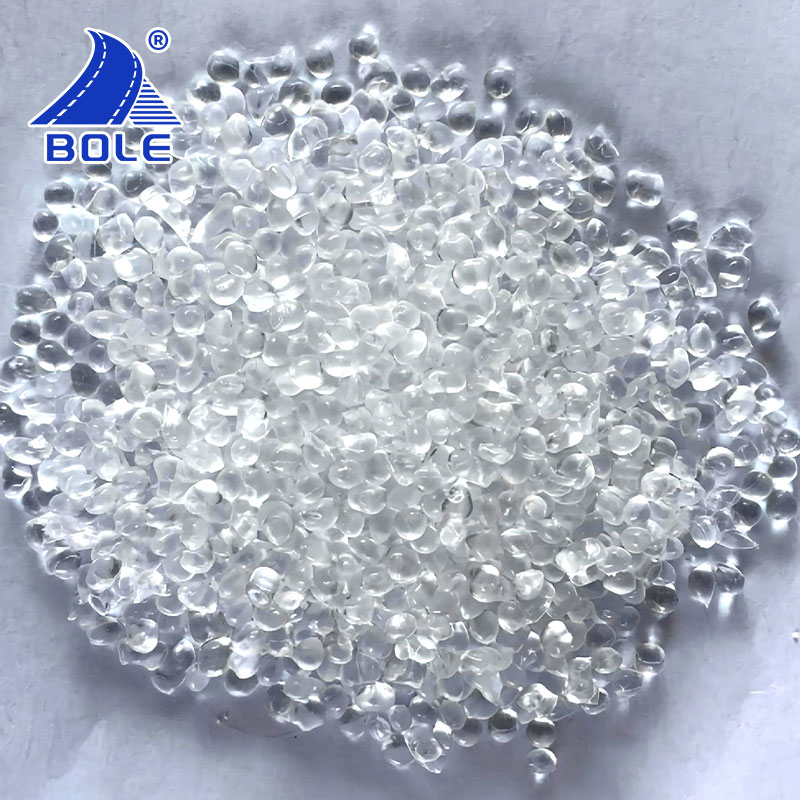
BOLE 10% premixed glass bead product illustration. |

BOLE 20% premixed glass bead product illustration. |
Premixed glass beads are incorporated into the thermoplastic material during production. The stated percentage describes the bead content supplied within that formulation. Before comparing quotations, confirm the measurement basis and ensure both suppliers are describing premixed content rather than surface-applied beads.
These percentages describe a formulation option. They are not a universal classification that automatically assigns 10% to city roads or 20% to highways. Road authorities and individual projects can specify different material and performance requirements.
| Specification / buying question | 10% premixed option | 20% premixed option |
|---|---|---|
| Brand | BOLE | BOLE |
| Material form | Thermoplastic powder | Thermoplastic powder |
| Premixed glass bead content | 10% option; confirm the agreed measurement basis | 20% option; confirm the agreed measurement basis |
| Catalogue series offering this content | General and high-performance series | High-performance and AASHTO / BS3262-labelled series |
| Catalogue pack specification | 25 ± 0.2 kg | 25 ± 0.2 kg |
| Catalogue shelf life | 12 months; check the batch label and storage instructions | 12 months; check the batch label and storage instructions |
| Catalogue construction temperature | 180°C–220°C; follow the selected product instructions | 180°C–220°C; follow the selected product instructions |
| Binder content and other properties | Depend on the selected series and agreed formula | Depend on the selected series and agreed formula |
| Surface-applied beads | Specify drop-on bead type and application requirements separately | Specify drop-on bead type and application requirements separately |
| Basis for final selection | Project acceptance criteria and an appropriate trial | Project acceptance criteria and an appropriate trial |
Reference: BOLE May 2026 catalogue, printed pages 11–13. The table compares available formulation options across product series; it does not imply that glass bead content is the only difference between grades. Confirm the exact grade, current technical data sheet and batch label when ordering. Standard names in the catalogue are product-series labels; request applicable test evidence for the specified standard and edition.
Explore the BOLE 10% premixed glass bead option and BOLE 20% premixed glass bead option, then confirm the grade required for your project.
Premixed beads are distributed within the thermoplastic layer. As the material wears, some previously enclosed beads can become exposed. Drop-on beads are applied to the freshly laid surface and provide reflective elements at the surface from the beginning.
Vehicle headlights illuminate the reflective elements, which return light toward the driver. The completed marking therefore depends on the bead properties and their position in the binder, as well as the paint formulation. Premixed beads do not automatically remove the need for a specified surface bead application.
For a fuller explanation, see glass bead types and road marking application or explore BOLE reflective glass beads.
| Mistake | What to check instead |
|---|---|
| Assuming 20% guarantees twice the retroreflectivity of 10% | Compare measured results under equivalent application and test conditions. |
| Treating premixed content as the surface bead application rate | Identify the two requirements separately in the quotation and work instructions. |
| Comparing bag prices without comparing specifications | Compare the same grade, pack weight, bead requirements, delivery terms and included materials. |
| Assuming a dry nighttime result proves wet-weather performance | Request evidence for the specified wet-weather condition when the project requires it. |
FHWA research describes thermoplastic systems with reflective elements both incorporated into the material and applied at the surface. It also identifies application variables such as bead drop rate, equipment speed, binder temperature and viscosity as factors affecting bead distribution and embedment. These factors help explain why a formulation percentage alone cannot describe the finished marking.
For projects in markets such as the Philippines, Indonesia, Malaysia, Vietnam, Kenya, Ghana, Mexico, Colombia and Chile, provide the actual project requirements rather than relying on the country name alone. BOLE offers factory-direct supply and can discuss formulation options based on local temperature and project needs.
It is a different formulation option, not a universal performance guarantee. Compare the complete grade, application system and measured results against the project specification.
Follow the specified marking system. Premixed beads are inside the material, while drop-on beads provide reflective elements at the new surface. Confirm surface bead requirements separately before construction.
No. Check the material requirements, traffic conditions and performance acceptance criteria. Road category alone does not establish the required glass bead percentage.
Yes. Send the destination, construction season, expected temperatures, pavement type and project specification so BOLE can discuss a suitable formulation option.
Request the agreed specification, technical data sheet, applicable test evidence, batch identification, shelf-life and storage instructions, and packaging and supply terms.
Send your project specification, destination, construction conditions and quantity. Ask BOLE to recommend a thermoplastic road marking paint option and matching surface glass beads for review.
Request a BOLE Product RecommendationTechnical reference: FHWA-HRT-12-048, pavement marking composition and application discussion. This reference explains application principles and does not certify a BOLE product or define the requirements of a particular local project.


