Thermoplastic road marking paint is a widely adopted solution for traffic safety thanks to its fast set-up, durability, and excellent nighttime visibility when combined with glass beads. Yet highways, city streets, parking facilities, and special infrastructures (airports, tunnels, ports, cold regions) place different demands on markings. This article explains how requirements vary by scenario and why selecting the right material improves safety and total lifecycle cost. For step-by-step application, see the Construction Guide.
Highways and expressways carry the highest traffic volumes and speeds, so markings must deliver extreme durability and clear guidance in both day and night conditions. Retroreflectivity is crucial because drivers moving at speed depend on bright, consistent lane definition under headlights and in wet weather. Reflective thermoplastic systems—combining pre-mixed and drop-on glass beads—are the standard choice, providing abrasion resistance and stable reflectivity under heavy loads. On well-maintained corridors, service life commonly reaches 2–3 years before renewal, which reduces lane-closure frequency and lifecycle cost. Quick cooling and reopening after application further minimize traffic disruption.
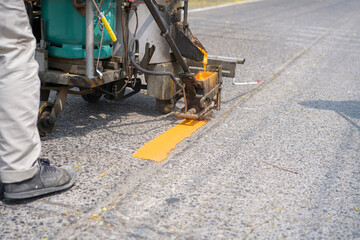
Urban networks mix vehicles, pedestrians, cyclists, intersections, and traffic-calming zones. Busy arterials and complex junctions typically use reflective thermoplastic for high visibility and turn/brake endurance. To further extend service life and reduce repainting cycles on critical corridors, many cities also deploy long-life materials such as two-component road marking paint.
On secondary roads or temporary layouts, cold-applied paints (solvent-based or waterborne) may be used for convenience and lower upfront cost, acknowledging a shorter life compared with thermoplastic. For safety-critical areas—crosswalks, school zones, bus lanes—durable solutions remain recommended to avoid frequent, disruptive maintenance. For general product information and support, visit BOLE’s homepage.
Parking facilities, residential lanes, and campus roads prioritize cost, convenience, and neat appearance over highway-level durability. Cold-applied traffic paints are common because they can be applied quickly with basic striping equipment and touch-ups are simple. Preformed thermoplastic tapes and films—supplied with standardized arrows, symbols, and built-in beads—offer clean edges and strong initial retroreflectivity, making them ideal for small or indoor projects. Although service life is typically shorter than highway thermoplastic, ease of reapplication and low-speed wear conditions keep maintenance manageable.
Runways and taxiways require high retroreflectivity, strong skid resistance, and resistance to jet blast, fuels, de-icing chemicals, UV, and thermal extremes. Thermoplastic or specialty solvent/waterborne systems with elevated glass bead loading and anti-skid aggregates (quartz/ceramic) are used, meeting ICAO/FAA/ASTM performance criteria. Fast set-up and robust durability are vital to minimize runway downtime.
Low-light environments and tight geometry demand superior visibility and friction. Colored or anti-skid thermoplastic coatings (e.g., red slow-down zones) enhance contrast, help drivers modulate speed, and support night/wet visibility. Proper bead embedment and pigment selection are key to long-term luminance.
Container yards, warehouses, and factory roads expose markings to heavy axles, forklifts, oils, and chemicals. High-durability thermoplastic or epoxy systems are favored for wear and chemical resistance. Layouts often include safety walkways, hazard zones, and loading bay guidance, all of which benefit from tough materials and high-contrast colors.
Sub-zero climates challenge wetting and bonding. Low-temperature thermoplastic formulations or two-stage heating methods help maintain flow and adhesion on cold pavements. Materials should retain flexibility and reflectivity in freeze–thaw cycles, with bead gradation selected to maintain retroreflectivity on winter-worn surfaces.
For troubleshooting on bubbling, peeling, reflectivity loss, contamination, and more, consult Common Construction Issues & Solutions, and for application steps and quality checkpoints refer back to the Construction Guide.
Different road environments impose distinct performance, durability, and construction constraints on markings. Highways prioritize long-life and bright retroreflectivity; urban corridors balance visibility with lifecycle cost; parking and campus areas value convenience and neat appearance; special sites require extreme resistance to chemicals, load, or climate. By matching materials—thermoplastic, two-component, cold-applied paint, or preformed products—to the scenario, asset owners can deliver safe, visible, and cost-effective guidance throughout the service life. For product selection and technical support, visit BOLE.


