Glass beads are a small but critical component in modern road marking systems. They restore and amplify the light from vehicle headlights (retroreflection), dramatically improving night-time visibility and road-user safety, while also extending the functional life of painted lines. This article explains why beads are used and provides a practical, technically detailed guide to the common methods and equipment for applying them—useful for contractors, specification writers, and procurement professionals aiming to meet strong E-E-A-T (Experience, Expertise, Authoritativeness, Trustworthiness) standards in their project documentation.
There are three principal ways to place glass beads into road markings: premix (embed beads into the paint or thermoplastic material prior to application), drop-on (apply beads onto the wet marking on the road surface), and double-drop (a two-stage deposition using coarse then fine beads). Each approach creates a different balance between immediate retroreflective performance, long-term durability, cost, and maintenance needs. Selecting the right method depends on road function (e.g., highway vs. parking), traffic loading, expected lifetime, and project budget.
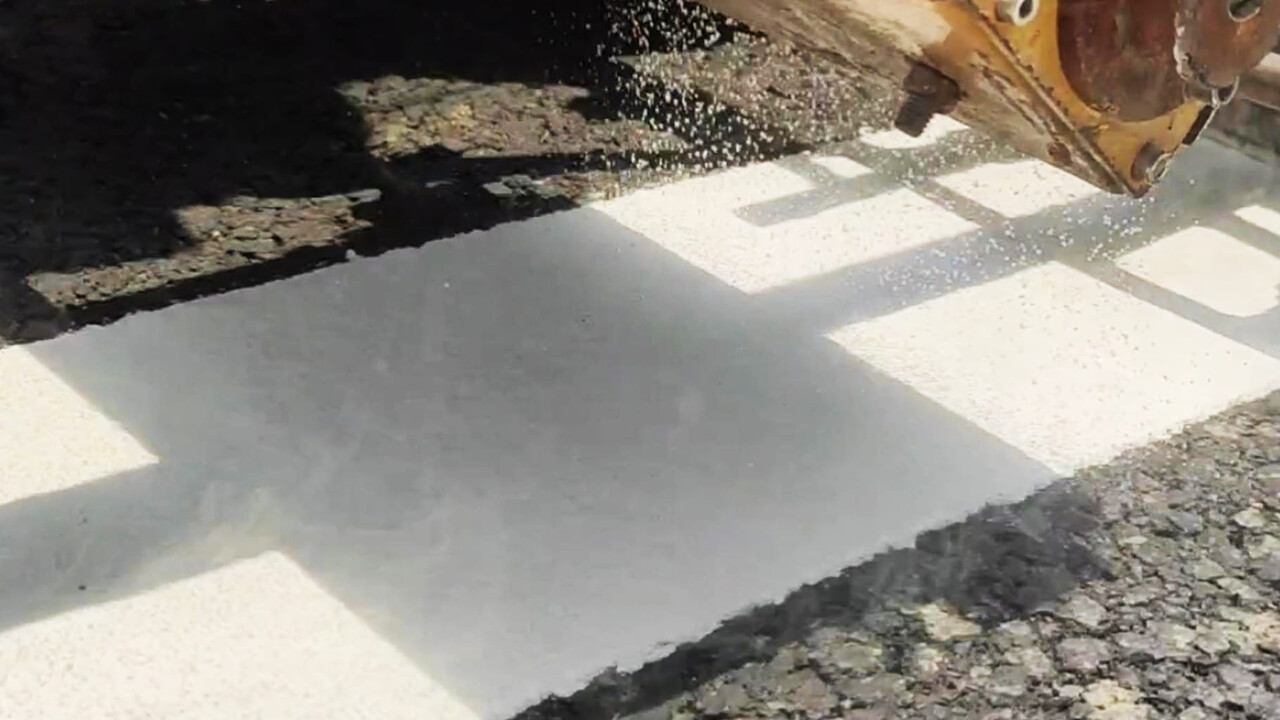
In the premix method, beads are mechanically blended into the marking material at the factory or on-site before application so that beads are dispersed throughout the binder matrix. During application the bead-loaded material is laid down and the binder cures with beads embedded inside the coating. Because most beads become partially encapsulated by the binder, premix lines tend to be highly durable and resist bead loss under heavy traffic and abrasive wear. However, the number of beads exposed on the surface — the beads that actually provide retroreflection — is inherently lower than with surface application, so initial night-time brightness may be reduced compared to Drop-On lines. Premix is therefore commonly used where long service life and resistance to mechanical wear are prioritized, such as high-abrasion urban corridors and some specialized airport surfaces. When specifying premix, attention should be paid to bead loading percentage, bead size distribution, and the binder’s compatibility to ensure beads are retained yet still present at the surface in sufficient quantity.
The Drop-On method deposits glass beads directly onto the uncured surface of the freshly applied marking material (paint, thermoplastic or cold plastic). Because beads sit partially on the surface, Drop-On delivers the highest initial retroreflectivity — drivers see bright, immediately reflective lines after curing — which is why it is widely used on new line applications and high-visibility markings. The timing of bead application is critical: beads must be dropped while the binder is still tacky but not so wet that beads sink completely; otherwise embedment depth and reflectivity are affected. Uniform bead distribution relies on accurate calibration of bead dispensers and stable application speed; otherwise, local over- or under-dosing causes glare inconsistencies or poor retroreflection patches. Drop-On is well suited to urban arterials, pedestrian crossings and other locations where immediate night visibility is essential, though it often requires higher bead consumption and more frequent maintenance than premix.

The double-drop (or two-stage) application combines two bead sizes in sequence: a first layer of larger/coarse beads followed by a second layer of smaller/fine beads. The coarse beads increase mechanical interlock with the marking material and improve durability by anchoring the line; the fine beads fill gaps and provide additional retroreflective surface area to boost initial brightness. This combination is particularly effective on high-speed highways, airport runways, and busy arterial roads where both long-term retention and high retroreflectivity are required. Equipment must be configured to accurately time and space the two drops so the second layer nests into remaining voids without fully covering and isolating the first layer. The double-drop method typically yields longer lasting high reflectivity than simple Drop-On, but at a higher operational complexity and material cost — therefore it is most often specified where safety and lifecycle performance justify the investment.
Proper equipment ensures beads are placed with repeatable uniformity, correct mass per unit length, and controlled embedment depth. From integrated dispensers on line machines to portable bead guns, equipment selection influences bead consumption, accuracy and the ability to execute premix or multi-stage methods on schedule.
Modern line marking machines (both hand-push and truck-mounted) commonly integrate an automatic bead dispenser that meters beads proportionally to paint flow or machine speed. These systems use calibrated feed screws, vibratory bowls or air-assisted ejectors to maintain steady bead flow and are adjustable for application rate (g/m or oz/yd). Advantages include synchronized bead output with the paint/thermoplastic pump, reduced operator error, and better consistency across long runs. High-quality dispensers include features such as speed-compensation (so bead rate changes with travel speed), sieving to remove fines, and dust control to limit airborne bead loss. Maintenance includes regular calibration, cleaning of feed paths, and verification of mass output against target dosing charts to maintain both performance and compliance with specification.
For double-drop applications, separate calibrated depositors or bead guns are often required — one for coarse beads and one for fine beads — with independently controlled rates and nozzles. These tools allow operators to sequence bead layers precisely, typically from a synchronized control panel or PLC that triggers the second gun after a short delay. Precision in nozzle design, air pressure, and hopper agitation is essential to prevent segregation (where coarse and fine beads separate) and to maintain consistent particle stream geometry. Portable bead guns also permit targeted spot repairs, intersection work, and complex patterns where machine access is limited. For rigorous projects, contractors verify deposited mass by collecting and weighing beads over a measured length immediately after application to confirm compliance with the specified g/m values.
Bead distribution quality depends on a combination of timing, material thickness, bead properties and machine calibration. These four factors interact: incorrect timing negates even a perfect bead grade; wrong thickness prevents proper embedment; poor bead quality reduces reflectivity and lifespan; and mis-set equipment yields uneven coverage. Below we expand each factor so specifiers and contractors can create practical acceptance criteria that support both immediate and long-term retroreflective performance.
| Factor | What to control / measure | Typical acceptance guidance |
|---|---|---|
| Application time | Apply beads while binder is tacky; measure time window vs. product cure curve | Beads dropped within manufacturer-specified tack window (usually minutes for paints, seconds for thermoplastics) |
| Paint/thermoplastic thickness | Ensure sufficient binder depth to embed beads ~50–60% of bead diameter | Specify wet film thickness targets and measure with gauges during production |
| Bead quality | Size distribution, roundness, refractive index, and surface treatment (silanes) | Use certified beads meeting EN 1423/EN 1424 or equivalent; specify percent retained on sieves |
| Machine settings | Bead feed rate (g/m), nozzle geometry, application speed, air pressure | Calibrate daily; document settings and perform spot checks |
Choosing the proper bead application method — premix, Drop-On or double-drop — requires balancing initial visibility, durability, cost and operational complexity. High-visibility, short-to-medium life applications often favour Drop-On; long life and high abrasion locations favour premix or double-drop. Successful projects formalize bead specifications (size, coating, RI), define wet film thickness and bead mass targets, and require equipment calibration records and acceptance testing for retroreflection (e.g., RA or mcd·m⁻²·lx⁻¹).
Technical Editorial Team, BOLE Road Paint. The content above was prepared for contractors and procurement teams and is based on industry practice, technical datasheets and equipment manufacturer guidance. For project-specific recommendations, consult your product datasheet and local specifications or contact a qualified road marking materials specialist.
Suggested next steps for specifiers:


