Moisture is one of the most critical factors influencing the performance of thermoplastic road marking paint. Buyers and contractors often ask whether rainy days or wet ground conditions are suitable for construction. In most cases, direct application on wet surfaces is not recommended, but understanding the reasons, risks, and alternatives is essential for procurement and project planning.
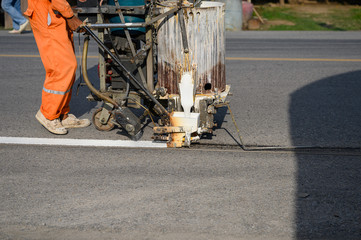
Before deciding whether to apply thermoplastic paint during rain or on damp pavement, it is crucial to know the technical risks involved.
Moisture trapped between the paint and road surface prevents proper bonding. This can cause premature peeling, shortening the marking’s lifespan. According to BOLE’s Buying Guide, surface dryness is a prerequisite for long-term adhesion.
Wet conditions reduce friction between machines and pavement, increasing the chance of slipping. Workers face higher safety risks, especially when handling hot-melt material at 180–210 °C. For reference, equipment such as the hand-push thermoplastic road marking machine requires stable ground to ensure both safety and line accuracy.
Excess water can create bubbles, cracks, or whitening of the coating. Retroreflectivity is also reduced because glass beads fail to embed properly when moisture is present. This compromises night-time visibility and long-term durability.
International standards such as BS 3262 and AASHTO M249 specify that surfaces must be clean, dry, and free of contaminants before application. In Vietnam, the TCVN 8791:2011 standard also emphasizes dry-surface preparation for thermoplastic coatings. The Philippine DPWH Department Order further aligns with this requirement, highlighting the importance of weather conditions in construction quality.
Although rainy or wet conditions are unfavorable, project delays can be mitigated by adopting practical solutions.
Use road dryers or gas burners to remove moisture before applying paint. For large projects, mechanized preheaters and drying machines can speed up surface readiness. Equipment such as the thermoplastic preheater ensures materials are melted at the correct temperature while site drying progresses simultaneously.
Some suppliers offer modified thermoplastic formulations with improved wet adhesion, though these are typically more expensive. Contractors should weigh the additional cost against the risk of rework. For practical insights, see BOLE’s case studies on how customized formulations helped overcome challenging weather conditions.
Plan application for dry weather windows. In regions with high rainfall, night or early-morning construction may reduce exposure to moisture. This requires close coordination between contractors and procurement teams to ensure materials, machines, and labor are ready for narrower timeframes.
When purchasing thermoplastic paint, contractors should evaluate supplier specifications on moisture sensitivity. Request technical data sheets that clarify acceptable ambient humidity, heating temperature (180–210 °C), and softening point (90–125 °C). Reliable suppliers also provide durability data, such as expected service life, and guidance for wet-surface risk mitigation. This ensures procurement decisions align with international standards and project conditions.
In conclusion, thermoplastic road marking paint should not be applied on rainy days or wet surfaces without special preparation. Risks include poor adhesion, safety hazards, and reduced service life. Buyers and contractors are advised to work with experienced suppliers, adopt drying equipment, and follow international standards. For more solutions and supplier support, visit the BOLE official homepage.


