As a long-term supplier of thermoplastic road marking paint, we know that buying a ton of paint is never just a price decision—it extends into safety for drivers, project efficiency for contractors, and liability for owners. This guide helps highway buyers, engineers, and contractors choose the right coating, deploy the right tools, and avoid the hidden risks of poor procurement.
When a driver has been on the highway for hours and focus begins to slip, the tires hit a slightly raised rumble marking—about 2 mm thick—and the subtle vibration brings awareness back. That tactile “nudge” is a deliberate outcome of thermoplastic applied in a thicker film profile.
Thermoplastic also carries embedded glass beads that retroreflect headlight beams at night or through fog, creating a bright visual guide when visibility drops. A good line can be seen and also felt—that’s the foundation of modern highway safety design.
Learn how thermoplastic road marking paint works (Wikipedia)

Selecting low-cost, low-spec coatings may look economical up-front but often produces safety and lifecycle problems:

These failures typically trace back to substandard raw materials (e.g., poor TiO₂ quality), inadequate resin systems, moisture/UV mishandling in storage, or ignoring standards. A “cheap” purchase often means shorter service life, more closures for rework, and higher total cost—with real safety implications.
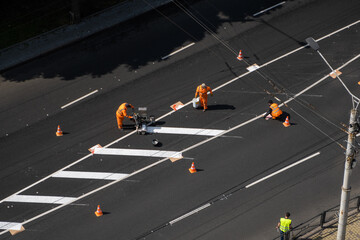
Highway projects stretch for dozens or hundreds of kilometers. Efficiency is safety: fewer closures, more consistent lines, faster handovers.

Require a TDS (technical data sheet), lab reports, and batch traceability for every shipment. For highways, verify at least:
| Inspection Item | Recommended Requirement | Why It Matters |
|---|---|---|
| Standards Compliance | BS 3262 / AASHTO M249 / local DPWH | Baseline for durability, bead retention, and visibility. |
| Retroreflectivity (RL) | ≥ 200 mcd·m⁻²·lx⁻¹ (project-specific) | Night and wet visibility for driver guidance. |
| Color Stability | No darkening/yellowing under UV & heat | Prevents misperception and early repaint cycles. |
| Softening Point | ~100–110 °C | Resists deformation in hot climates and heavy traffic. |
| Glass Bead Ratio | ~18–25% (typical, per spec) | Ensures sustained retroreflectivity and safety. |
| Film Thickness | 1.5–2.5 mm (project design) | Supports tactile alertness and bead embedment depth. |
| Packaging | Soluble, melt-in bags | Speeds charging, reduces dust, lowers handling risk. |
| Shelf Life | ≥ 12 months (proper storage) | Maintains application performance across phases. |
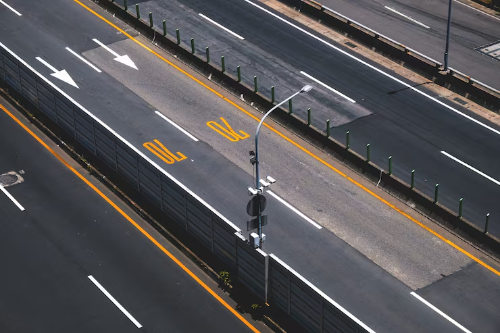
Our position is simple: spec-first procurement saves lives, budgets, and time. For highway-grade performance, align materials (thermoplastic formula & beads), methods (temperature, thickness, bead drop), and machines (electric/ride-on, calibrated bead dispensers).
We supply international-standard thermoplastic road marking paints with soluble packaging, OEM/ODM formulas for different climates, and technical guidance from trial to acceptance. If your next tender or project requires highway visibility, tactile alertness, and long service life, talk to us before you lock the spec.
Let’s build safer highways together—one line at a time.
👉 Contact BOLE for highway-grade marking solutions


