Thermoplastic road marking paint is a widely adopted material for durable and high-visibility lane markings. It is especially popular on highways, arterial roads, and urban intersections due to its fast-drying properties, high retroreflectivity, and resistance to wear. For contractors and procurement officers, choosing the right type of thermoplastic paint and supplier is critical to both safety performance and project cost-efficiency. This guide outlines everything you need to know to make an informed purchasing decision.
Different road types call for different grades of thermoplastic road marking paint. Highways and expressways demand premium reflective paint with high durability. Urban intersections with high vehicle turning movements may require more wear-resistant compositions. For areas like parking lots, loading bays, or industrial sites, colored thermoplastic or anti-skid variants might be more suitable.
In hot or tropical regions, anti-softening formulations with UV protection are preferable. In colder climates, low-softening-point or modified resins ensure flexibility and prevent cracking during freeze-thaw cycles.
Look for paints with at least 30% premixed glass beads. For wet-weather visibility and night driving, select high-RL paints and anti-skid options. Learn more about whether thermoplastic paint is slippery or not in wet conditions.
Make sure your selected paint is compatible with your hand-push applicator, melting kettle, or vehicle-mounted machine. Key parameters like softening point, flowability, and heating range must align with your setup.
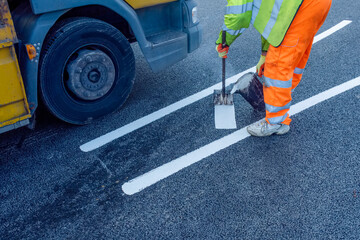
Confirm the product complies with standards like AASHTO M249, BS 3262, or local norms. Request test data for reflectivity, whiteness, wear resistance, and standard thickness.
Choose manufacturers with lab testing, export experience, and support services like COA, MSDS, and customs documentation. Responsive support is key.
Good suppliers offer free samples, OEM/ODM packaging, and guidance on installation and troubleshooting.
Standard white thermoplastic paint ranges from $300–$700 per ton. Specialty versions may cost more.
Average coverage is 4.0 kg/m² for 1.8 mm thick lines. Thicker applications or coarse road surfaces require more.
Include beads, primer, freight, import duties, and machine operation in your total cost estimate.
Low prices may mean diluted content or poor performance. Always verify with a TDS or real-world sample.
Check if lines are straight, bright, and defect-free. Verify thickness is consistent with specifications.
Test skid resistance, adhesion, and retroreflectivity with appropriate devices.
Ensure all paperwork (COA, MSDS, test reports) matches delivered goods.
By following this guide, contractors and buyers can avoid pitfalls, select reliable thermoplastic road marking paint, and ensure durable, compliant road markings for their projects.
For more resources, visit our official website.


